The year 2025 is coming to a close. Nazarene Caffeine is now over 5 years old, and this is the 3rd Year-In-Review we have done. God has done some incredible things in the past year, and I know that he has some very good things for us in 2026.
The past year was a year unlike any other that we have experienced since Nazarene Caffeine was founded. Nazarene Caffeine launched the Barnabas Initiative as a means of connecting individuals to church communities. Since launching in September, we have helped 2 people connect to a church community in which they will be cared for spiritually.
This past October, we also participated in our first in-person event, where we handed out Lifebooks, represented Christ, and engaged attendees on the question of the relevance of the church in today's world. The overwhelming response was that the church is, in fact, still very relevant today, a response that I was pleased to see.
In 2025, we also saw a loss of several Christian leaders. Our prayers are with the loved ones, friends, and families of these individuals.
The Countdown
As is tradition, Nazarene Caffeine will count down the top 10 most viewed articles in the previous year. I am surprised at some of the results, as they seem to indicate a shift in what people are looking for from Nazarene Caffeine. Without any further delay, let's get into it.
This article is one of the earliest that I have written, and serves as a short commentary on the Nazarene
Article of Faith on these topics. This is not the first time that this article has appeared in the top 10 for the year. Last year, this article was in the #4 spot. Although it slipped down to 10th this year, the fact that it is still in the top 10 tells me that people are still asking questions about justification.
This article is part of our series on the
King James Only Controversy. For those who do not know, I went to a Christian high school that was influenced by the Ruckmanite circle of the King James Only movement. This series explores some of my critiques of Ruckmanism. Psalm 12 has served as a proof-text for the Ruckmanite claim that God has preserved the King James Version of the Bible as the divinely inspired translation in the English language. This article, along with its second part, challenge that assumption, arguing that Psalm 12 isn't about the preservation of a particular English translation. For the full breakdown, check out the article.
This article was the first article in my series on the Nazarene Articles of Faith, written all the way back in October of 2020.
Last year, this article occupied the #6 spot. It stays in the top 10 this year, remaining relevant as an articulation of one of the most misunderstood doctrines of the Christian faith among people today.
There seems to be a cultural assumption that, if the Bible is silent on an issue, then it must approve of that issue. Or, at minimum, it must not oppose that issue. In this article, I tackled the assumption that silence is equal to endorsement and show how such an argument is ultimately an argument from silence. This article is in the top 10 for the first time this year.
This is the second part of the article that landed in the #9 spot. In this second part of the article, I counter the idea that Psalm 12 is specifically about the King James Version of the Bible (or any other English bible, for that matter), showing what Psalm 12 is actually referring to. This article was in the #2 spot last year, but still remains relevant to the King James Only discussion.
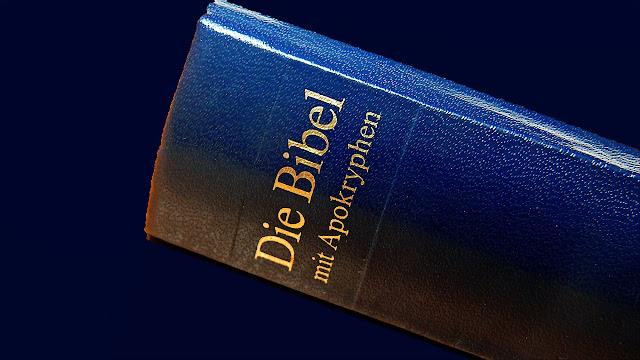
Peter Ruckman was a prominent King James Only leader in the 20th century. He accepted the divine re-inspiration of the King James Version. He also rejected the apocrypha, which was included in the 1611 King James Version. This creates a dilemma for Ruckman. Was the apocrypha inspired, just as he believes the rest of the King James Version is? Or are certain parts of the King James Version less "re-inspired" than others? This article explores an instance of how the Ruckmanite brand of the King James Only movement creates a dilemma for itself. It explores ways in which Ruckman has attempted to avoid the implications of this dilemma, and demonstrates why they fail.
The Nicene Creed is among the most important statements in the history of the church. Despite this, many people remain unfamiliar with its contents. This article provides a brief overview geared for those who are unfamiliar with this creed or its contents. Last year, this short commentary on the Nicene Creed took the #3 spot on the list. This year it has remained relatively close, moving to the #4 spot.
Repentance is widely misunderstood in our culture. On one hand, there are individuals who deny that repentance is necessary to the Christian life, or even important. On the other hand, there are those who devalue repentance by reducing it to a mere apology. Both of these views are wrong. This article, which is up from the #9 spot last year, explains a biblical understanding of repentance and its importance to the Christian life.
This was one of the earliest entries written on Nazarene Caffeine and, in every single year we have done this countdown, has occupied the #1 spot on the list. That is, until this year. This entry explores several Christian magazines that you can find for free. Some of the magazines on this list are physical copies. Some of them are digital copies. All of them are good Christian magazines to subscribe to.
And Finally.........
Occupying the number 1 spot over the course of the past year is another article from the King James Only series. It seems that this series was incredibly popular over the past year, and this article landing in the #1 spot supports that thesis. This article received approximately 20 more views over the past year than the #2 article, barely making it to the #1 spot.
This article explores some very significant implications of Peter Ruckman's theology. In some ways, Ruckman's brand of King James Onlyism actually backfires on his larger theology. If you want to see why Ruckman's brand of King James Onlyism is not feasible, check out the article.
Conclusion
Which of these articles have you read? Which article have you enjoyed the most? Let us know in the comments below!
.png "2025 Year In Review")


.png)
.png)
Comments
Post a Comment